Wendy Laursen
Contributing Writer-
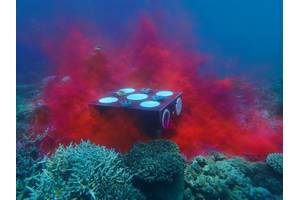
Subsea Technology Helps Coral Larvae Find Home
This week, researchers at Australia’s Southern Cross University and CSIRO gave hope that millions of coral larvae on the Great Barrier Reef can help replenish degraded reefs thanks to the development of a “larval seedbox.”Results from the first trial have found coral settlement to be up to 56 times higher across thousands of square meters of reef. Large scale operation is achievable as tens of millions…
-
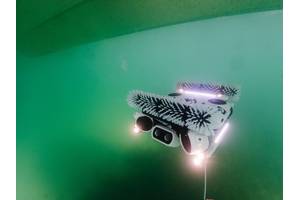
Money Pours in for Hull Cleaning Technology
In April this year, the IMO Marine Environment Protection Committee approved guidance on in-water cleaning of ships' biofouling and also approved a proposal for the development of a legally binding framework for the management of biofouling.The move comes in recognition that biofouling is a key contributor invasive species and to greenhouse gas emissions. Biofouling can increase fuel consumption by up to 30%…
-
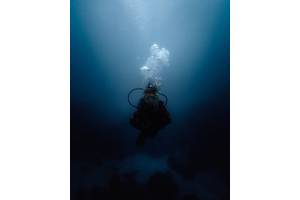
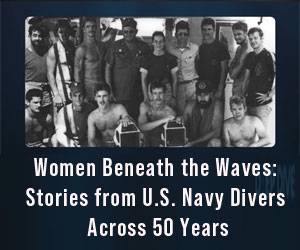
Women Navy Divers Meet Same Standards as Men
On March 14, 1975, 22-year-old Californian woman Donna Tobias graduated from the US Navy Second Class Dive School to become the first woman deepsea diver in the Navy.Marking the 50th anniversary of women’s integration into the US Navy Diving community, the Association of Women Navy Divers highlights that over 300 women have now graduated from the Navy’s schools.The society recounts that this happened…
-
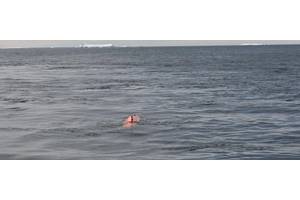
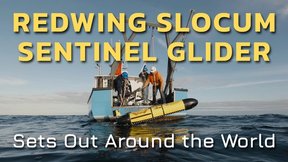
AI is Boosting Operational Autonomy
In a world-first for marine science and technology, Teledyne Marine, in collaboration with Rutgers University-New Brunswick, has just launched an autonomous glider that will circumnavigate the globe.Navigational adjustments will be made along the way, as full operational autonomy is something that the underwater robotics industry continues to perfect.The loss of the University of Gothenburg AUV Ran demonstrates what can go wrong.
-
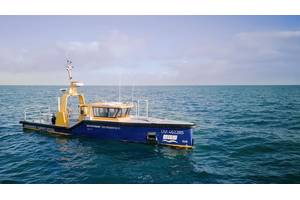
Down Under
As an island nation, Australia has one of the largest marine jurisdictions in the world and is responsible for around 4% of the world’s oceans. The nation is also home to the world’s largest iron ore port, Port Hedland, and the world’s largest coal port, Port of Newcastle.Greenroom RoboticsHydrographic survey is very critical for a country like Australia, and we're not keeping up with the pace of demand of having key areas mapped, says Peter Baker, Director of Growth at Greenroom Robotics.
-
Subsea Cables Accellerate Africa’s AI Potential
70% of sub-Sahara Africa’s population is under 30, and the continent is projected to account for a quarter of the world’s population by 2050. Telecommunications and AI companies are aiming to transform the potential they see there by offering greater capacity for harnessing AI.African digital infrastructure company SEACOM is launching SEACOM 2.0, a subsea cable system it says is poised to redefine connectivity across the Indian Ocean Basin…
-
Uncertainty Reduces New Oil and Gas Investment
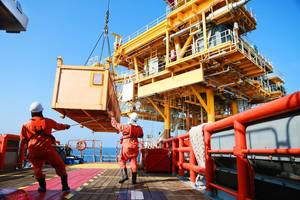
Several news items this week highlight the potential consequences of uncertainty in the energy market.Fugro scrapped its annual outlook and announced further job cuts, citing an impact from project delays. The company said that projects in the offshore wind and oil and gas markets would be delayed into 2026 and their scope cut back, resulting in an estimated 100 million euros ($117.5 million) impact on its revenue."The previously anticipated 20% revenue growth is no longer realistic…
-
USVs Getting Smarter, Faster and More Flexible
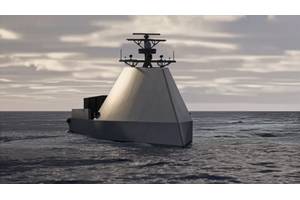
The rapid pace of uncrewed surface vessel (USV) technology development has been on display this month, most recently with CSBC Corp’s military-grade USV Manta being demonstrated at the Taipei Aerospace and Defense Technology Exhibition.All components of the trimaran USV are guaranteed to be from non-Chinese sources, and the software used on the ship was developed by a joint venture between domestic and foreign companies, excluding China.
-
Robots as Clever as an Octopus
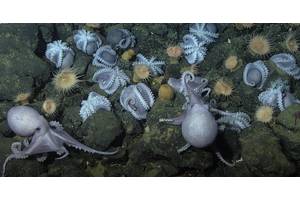
Octopuses have nine brains, one donut-shaped one in their head plus a small one in each of their eight arms. They can use tools, solve puzzles, and recognize human faces.Take Otto, an octopus that once lived in the SeaStar Aquarium in Germany. He was known to squirt water onto an annoying light above his tank, short-circuiting the lights in the entire building. Employees said he got bored when the aquarium was closed and would rearrange the tank…
-
Western Australia Can’t Wait [for a Decommissioning Hub]
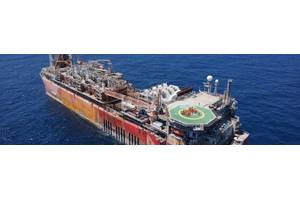
The Northern Endeavour FPSO is being shipped by a Chinese heavy lift ship from Australia to Denmark for recycling.Installed between the Laminaria and Corallina oil fields in the Timor Sea and unproductive since 2019, its fate became the burden of the Australian government after it underwent a string of ownership changes.Australia doesn’t have the recycling facilities needed for the job, although the government has been taking some action on the issue.
-
Wine Down Under
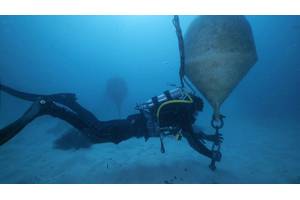
Brad Adams, co-founder of Subsea Estate in Western Australia, has just retrieved vats of his latest wine from the seabed just off the coast of Augusta.Partnered with wife and co-founder Jodee Adams and chief wine maker Emmanuel Poirmeur, he is creating a product unique in the southern hemisphere.For the last two years, Subsea Estate has produced Semillon and Shiraz that has undergone its secondary…
-
LARS: Not Just a Simple Handling Tool
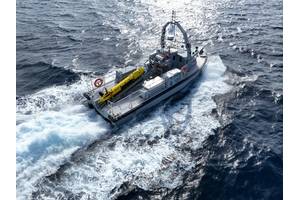
Launch and recovery are often the riskiest parts of a subsea operation, and as iDROP COO David Galbraith points out, with a payload of new data, subsea vehicles are more valuable on recovery than they were on launch.For iDrop, the challenge is how to launch and recover large numbers of its autonomous ocean bottom nodes (OBNs). The current method for laying OBNs, which catch reflected waves during seismic surveys, involves specialist vessels and crews.
-
Autonomy and Route Optimization Lead AI Research Boom
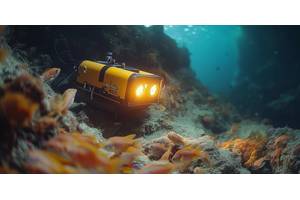
The first applications of AI in ocean science and maritime engineering date back to the 2000s, and a paper recently published in Ocean Engineering tracks the subsequent growth in the number of scientific studies charting its advance.Since 2018, the number of studies using AI techniques has been doubling each year, reaching 1,329 in 2022. This growth corresponds with developments in autonomous vessel and vehicle navigation…
-
Plastic Free July and a Treaty in the Making
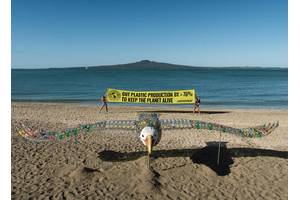
Around 170 million people participate in Plastic Free July each year. It’s a month-long challenge to avoid as much single-use plastics as possible.“We ingest about the equivalent of a credit card of microplastics every week*, and these tiny particles of plastic have found their way to our blood and brains,” said Greenpeace during the month. “Scientists are only beginning to understand the long-term effects of plastics on our health…
-

Good Ocean, Good Business
There is an estimated 3.5 million square miles of ocean space suitable for finfish mariculture and about five times that suitable for seaweed production. It’s a potential that is being realized around the world as new projects generate benefits for rural communities, cities and the environment.In Papua New Guinea, the UN Sustainable Development Group is focusing on creating meaningful, sustainable livelihoods for women and youth in Kimbe Bay…
-

An Oceanographic Music Mix
Music has an important role to play in climate crisis discourse, offering a sonic pathway to bridge the gap between data, understanding, reflection and action, say researchers from Australia’s Monash University.Their Dark Oceanography initiative integrates climate science with experimental music. Following the pathways of eddies from the Eastern Australian Current through the Southern Ocean and across the globe…
-
S-100 has Value Beyond ECDIS
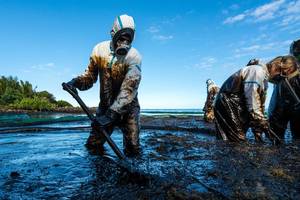
The S-100 framework is a new global standard created by the International Hydrographic Organization (IHO), in collaboration with other hydrographic offices around the world, that enables the integration of diverse datasets within a single Electronic Chart Display and Information System (ECDIS).Mariners will be able to combine various data layers with Electronic Navigational Charts including detailed…
-
Anthropocene Markers
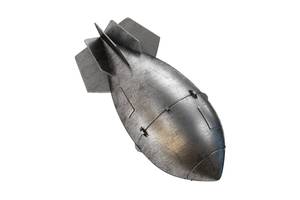
For a while, the thin layer of plutonium that encircled the globe after the first nuclear weapons tests was considered the leading geological marker for a new geological epoch, the Anthropocene, the time when human impact on the earth became profound.Geologists have been able to measure a distinctive spike in the concentration of plutonium in ocean sediments from the US tests in the Marshall Islands…
-
Subsea Warfare Need Not Involve Target Destruction
This week, two unmanned surface vessels (USVs) were launched as part of a trial by Denmark's defense ministry aimed at boosting the nation’s maritime surveillance capabilities.Countries bordering the Baltic Sea are on high alert after a number of outages of power cables, telecom links and gas pipelines since Russia's invasion of Ukraine in 2022, including sabotage of the Nord Stream gas pipelines.As defense analyst David R.
-
Ice “Memory” to be Protected in Antarctica
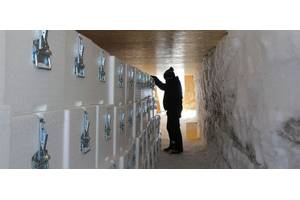
The Ice Memory Foundation is preparing for the upcoming transport of ice cores from mountain glaciers to the Ice Memory Sanctuary in Antarctica.The announcement was made as part of the launch of the UN Decade of Action for Cryospheric Sciences (2025-2034) during the third UN Ocean Conference in Nice on June 8.Preserved in the Ice Memory Sanctuary at Concordia Station, the cores will be available for…

 August 2025